
— Frequently Asked Questions
Straight answers about grease, grit, and what happens after the truck leaves
Three decades of servicing Southern Nevada kitchens, car washes, hotels, and laundries has produced a predictable set of questions. Here are the real answers — trap sizing, pump-out intervals, manifests, pricing, and the ones we get asked at 2am.
New to grease traps? Start with our complete grease trap guide.
AT A GLANCE
35
Answered questions
6
Topic areas
24/7
Emergency dispatch
3
Counties served
Question not covered here? Call our team — emergency dispatch runs 24/7.
Browse by Topic
Six things people actually ask about
Jump straight to a topic, or scroll down and search everything at once.
Grease Traps
How traps work, how often they need pumping, and what to do when one fails.
Grit, Lint & Septic
Car wash grit, laundry lint, and commercial septic systems — the other three traps.
Service & Scheduling
Response times, access, overnight windows, and what to have ready before we arrive.
Compliance & Records
Manifests, inspectors, SNHD rules, and the paperwork that keeps you out of trouble.
Still not sure?
Describe the problem and we will tell you what it usually is.
Showing 35 of 35 questions
GREASE TRAPS · 7
What is a grease trap and how does it work?
A grease trap is a plumbing device that intercepts fats, oils, and greases (FOG) before they reach the public sewer. Wastewater slows down as it enters the trap, and a baffle holds the grease layer at the top while heavier solids settle to the bottom. The relatively clear water in the middle is the only part that flows out to the sewer. Without that separation, FOG cools inside your lateral line, hardens in layers, and eventually blocks it.
How often does my grease trap need to be pumped?
There is no single number that fits every kitchen. Scheduling depends on trap size, daily water volume, menu type, and how much fryer oil you use — a small cafe and a 24-hour diner with the same trap will not fill it at the same rate. The working rule most health departments use is the 25% rule: when the combined grease and solids layer reaches a quarter of the trap depth, it is due. Many restaurants land somewhere between every 30 and 90 days. We measure the layers on each visit and recommend a schedule based on your actual fill rate rather than a guess.
How do I know when my grease trap needs service?
Watch for slow-draining sinks, gurgling sounds, a sewer smell around the trap lid, standing water in the floor drain, or grease visible on the ground near the lid. Automatic units will usually alarm before that point. If you are already seeing an overflow, stop using water in the affected area and call us at (702) 642-9318 — an overflow is a health code issue the moment it leaves the trap.
What size grease trap do I need for my business?
Bigger is not automatically better. An oversized trap can let wastewater sit long enough to go septic, which causes odors and accelerated corrosion, while an undersized one fills faster than you can pump it. Sizing is based on fixture capacity, seating, and peak flow, and the final number has to satisfy the authority having jurisdiction. Before installing anything, confirm the required size with your sewer authority or building department, then we can help you match equipment to that requirement.
What is the difference between a grease trap and a grease interceptor?
The terms get used interchangeably, but generally a grease trap is the smaller indoor unit — often under a sink or in the floor — while a grease interceptor is the larger outdoor concrete or steel vault, often 500 to 2,000+ gallons, that serves the whole building. Both do the same job and both need pumping. We service both, and the equipment and access differ enough that we will ask which one you have when you call.
Do you install grease traps?
Yes. Our team performs grease trap installations. If you need a new trap, call us at (702) 642-9318 and we will help you confirm the required size and get it installed.
Can I repair my grease trap on my own?
No, and this is one of the few answers we will not soften. A grease trap is a confined space. It can hold hydrogen sulfide and other gases that displace oxygen, and there have been fatalities from technicians entering traps without the right training. Our crews are trained for confined space entry by an OSHA-approved instructor and are equipped to monitor the gases inside the trap and deliver fresh air. A general plumber without that equipment should not be opening one either.
GRIT, LINT & SEPTIC · 5
What is a grit trap and who needs one?
A grit trap — sometimes called a sand trap or clarifier — captures sand, gravel, dirt, and heavy solids along with oil and sludge from wash water. Car washes, auto detail shops, dealerships, and service bays need one before discharge, because grit destroys downstream pumps and the oils are regulated just like kitchen FOG.
How often should a grit trap be cleaned?
It depends almost entirely on throughput. A high-volume tunnel wash may need monthly service, while a small self-serve bay can stretch further. The trap announces itself: standing water in the bays, grit backing up into the drain, or solids reaching the discharge point. We measure the accumulated depth on each visit and set the interval from that, which is far more reliable than a fixed calendar.
What is a lint interceptor and do I need one?
A lint interceptor is a screened or basket-equipped trap installed on laundry discharge. It catches lint, thread, and rags before they reach the sewer, where they mat together and clog lines or wrap around pump impellers. Laundromats, hotel and resort laundry operations, schools, and commercial commissaries all typically require them.
How often does a commercial septic tank need pumping?
For most commercial systems, annual pumping is a reasonable starting point, but the correct answer is measured rather than scheduled. Once the combined sludge and scum layer reaches roughly 25 to 30% of the tank volume, capacity is compromised and solids start carrying into the drain field. We check the layers and give you a real interval. A system serving a restaurant or a busy restroom trailer will fill far faster than one serving an office.
Can you pump my septic tank and grease trap on the same visit?
Yes, and it is usually the most economical way to do it. The two waste streams are kept separate and manifested separately, so your records stay clean and each stream is disposed of correctly. Just tell us both are on site when you schedule so we send a truck with enough capacity.
SERVICE & SCHEDULING · 6
How fast can you get to my property?
Same-day scheduling is available across the Las Vegas valley, including Henderson, North Las Vegas, and Summerlin. Outlying communities such as Boulder City and Mesquite are scheduled on a regular route, and our 24/7 emergency dispatch handles genuine emergencies like overflows, backups, and lift station failures.
Do I need to be on site for service?
No. If we have a gate code, a key, or a known access point, we can service the trap and leave the generator copy of the manifest where your team can find it. Many hotel and casino accounts prefer to be serviced overnight with no one from their team on hand.
What time of day can you service?
Your schedule, not ours. Restaurants are usually serviced before opening or after close so the kitchen never goes down mid-service. Casinos, hotels, and resort laundry operations typically prefer overnight windows. When you request service, tell us the window that protects your operations and we will build the route around it.
Do you service areas outside Clark County?
Yes. We regularly work in Nye County, Lincoln County, and outlying Clark County communities including Boulder City, Pahrump, Mesquite, and Laughlin. Travel beyond the core valley can carry a charge, but it is always quoted before we dispatch — never a surprise on the invoice.
What information do you need to schedule service?
The service address, the type and approximate size of the trap, your business type, and anything that affects access — gate codes, alley approach, whether the lid is under a mat or behind equipment. If you have a prior manifest handy, the trap size is usually on it. The more of that you can share, the more accurate the first quote will be.
What should I do if my trap overflows before my scheduled service?
Stop putting water down the drains in that area, keep staff and customers away from the spill, and call us at (702) 642-9318 — do not wash it into a storm drain, which turns a service call into an environmental violation. We treat overflows as emergencies and will dispatch ahead of the regular route.
PRICING & BILLING · 5
How is pricing determined?
The main variables are trap size, the volume pumped, how often you need service, how easy the lid is to reach, and the disposal fees for the waste stream. Because those differ from site to site, we quote per property rather than publishing one flat number. You get transparent, upfront pricing before the work starts, and our Pricing & Fees page covers how rates, surcharges, and fees are set.
Do you charge extra for nights, weekends, or emergencies?
Emergency service can carry an additional fee, because it means re-routing a truck and crew off a scheduled route. What we will not do is surprise you with it — any extra charge is explained before we roll.
Do you offer scheduled maintenance contracts?
Yes, and they are almost always cheaper than reactive service. A recurring schedule keeps the trap from reaching the point where it overflows, spreads the cost predictably across the year, and generates a documented service history that is genuinely useful during an inspection. We recommend an interval based on measured fill rate rather than a sales target.
How do I pay my bill?
You can pay online through our payment portal. For other payment options or account questions, contact the office at (702) 642-9318 or info@silvercityprocessing.com.
Is there a charge for travel to outlying areas?
Sometimes, yes. Properties well outside the core valley — Pahrump, Mesquite, Laughlin, and parts of Nye and Lincoln County — may carry a travel charge. It is always disclosed and agreed before dispatch.
COMPLIANCE & RECORDS · 6
Who regulates grease traps in Southern Nevada?
In Clark County, your sewer authority (the Clark County Water Reclamation District, or the City of Las Vegas, Henderson, or North Las Vegas, depending on your address) sets the grease interceptor rules and inspects interceptors. The Southern Nevada Health District permits and inspects food businesses. Nye County and Lincoln County each run their own environmental health departments, with their own sizing formulas and pump-out intervals. If you operate across county lines, the same trap design may not satisfy both jurisdictions, and it is worth confirming before you build or replace anything.
What is a manifest, and why should I keep it?
A manifest is the record of what was pumped, how much, when, and where it was disposed of. When an enforcement officer inspects your location, the manifest is the first thing they ask for. If it is not readily available, the officer has to assume the trap has not been serviced and will start looking harder at your equipment. We leave the generator copy on site at every service and keep an electronic copy as well.
Do you provide digital records?
Yes. Every visit is documented electronically in addition to the paper generator copy, which means a lost folder is no longer a compliance problem. If an inspector asks for your service history, we can pull it for you.
What happens if I fail an inspection?
Enforcement varies by jurisdiction, but the pattern is consistent: a re-inspection window, a requirement to prove the trap was serviced, and fines if the problem repeats. The fastest way through it is documentation — a service record showing the trap was pumped and the deficiency corrected. Let us know when an inspection deadline is driving the timeline and we will work to get a truck out quickly.
Do I need to post anything in the kitchen?
Many jurisdictions expect best-management-practice signage for FOG — what not to pour down the drain, where used oil goes, and who to call. It is a small thing that inspectors notice, and it helps new staff learn the routine. Check with your local regulator for the exact requirement.
Why should all my manifests be kept in one place?
Because searching for paperwork in front of an inspector reads as disorganization, and disorganization reads as non-compliance. Keep the generator copies in a single labeled binder on site, keep the electronic copies in one folder, and make sure whoever is on shift knows where that binder lives.
SUSTAINABILITY · 6
What happens to the grease you collect?
It goes to a permitted processing facility where it is separated and recycled — much of it becomes renewable fuel feedstock such as biodiesel, while the wastewater is treated before discharge. The short version: what leaves your trap does not go straight to a landfill.
Is used cooking oil worth anything?
Yellow grease has real value as a recycled feedstock, which is why collecting it in a dedicated container makes both environmental and financial sense. Pouring it down the drain is the worst option — you lose the material, and you pay later to clear the line it coated. If you need help arranging cooking oil collection, contact us.
How much waste does Silver City actually recycle?
Our parent company, Waste Resource Management, recycled more than 275 million gallons of wastewater in 2025 and is targeting 315 million gallons for 2026. That scale is what makes the recycling infrastructure possible — individual trap pump-outs only become meaningful in aggregate.
Why can’t the garbage disposal handle all my waste?
A disposal does not eliminate waste, it just changes its shape. Grinding food scraps produces a slurry that behaves like coleslaw in your drain line — it clings, mats, and clogs far more readily than whole pieces. Never treat a disposal as a substitute for a grease trap, and if you must use one, use it sparingly.
What is TrapRenew, and can it save a deteriorating trap?
TrapRenew is a rehabilitation process for concrete traps that are eroding but still structurally sound. We plug cracks and holes with hydraulic cement and recoat the interior with a pH-resistant lining. It costs far less than replacement, can often be done overnight without affecting operations, and some customers have had a TrapRenew last 10 years. The catch is timing — it only works before the rebar pulls away from the concrete, so it has to be caught early.
What is the best way to prevent an overflow in my kitchen?
Reduce what goes down the drain, scrape plates before washing, collect used oil in a dedicated container, keep to your pump-out schedule, and check that the baffle is still attached and intact. Use biodegradable detergents where you can. None of these are expensive, and together they prevent most of the overflows we get called out for.
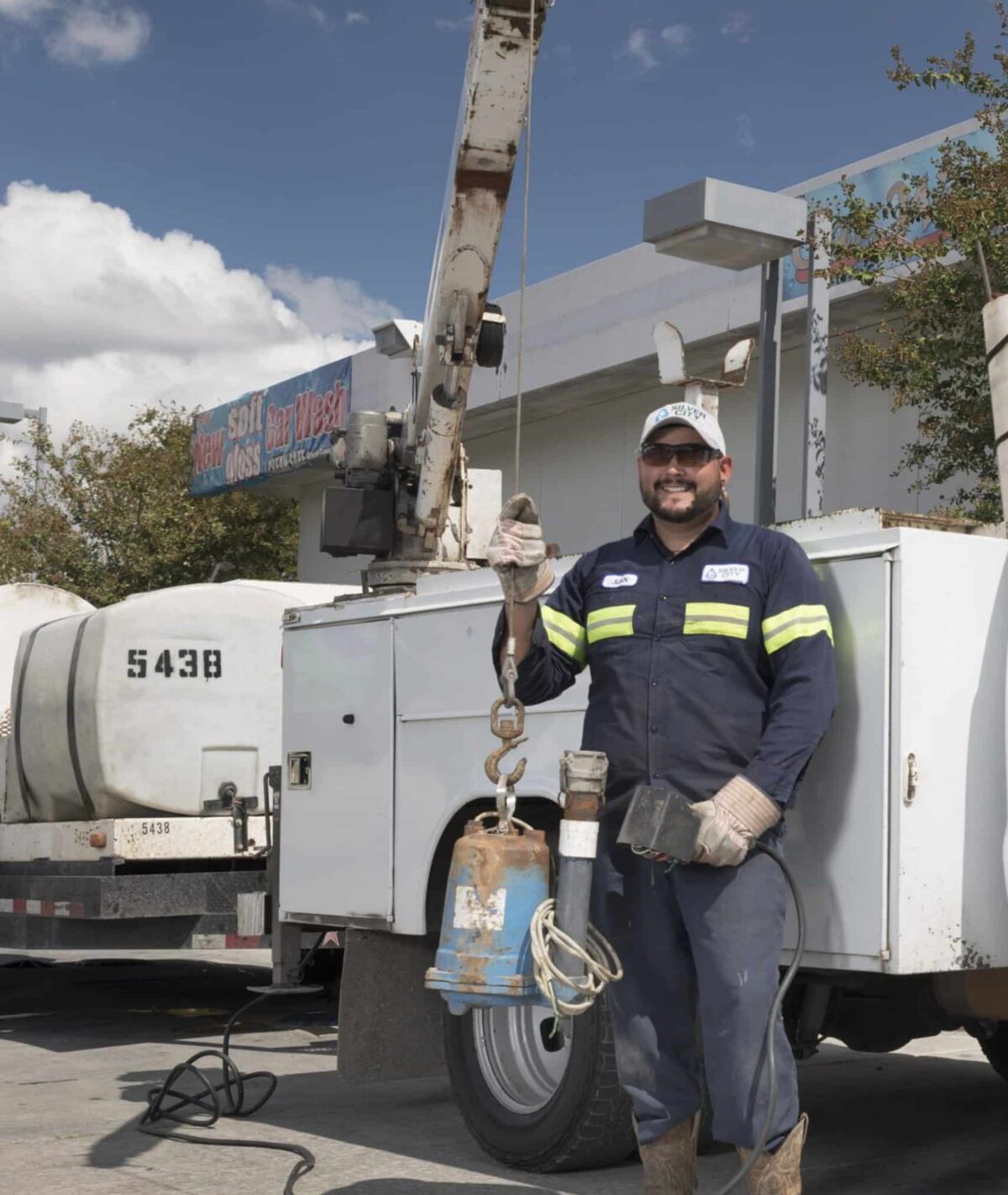
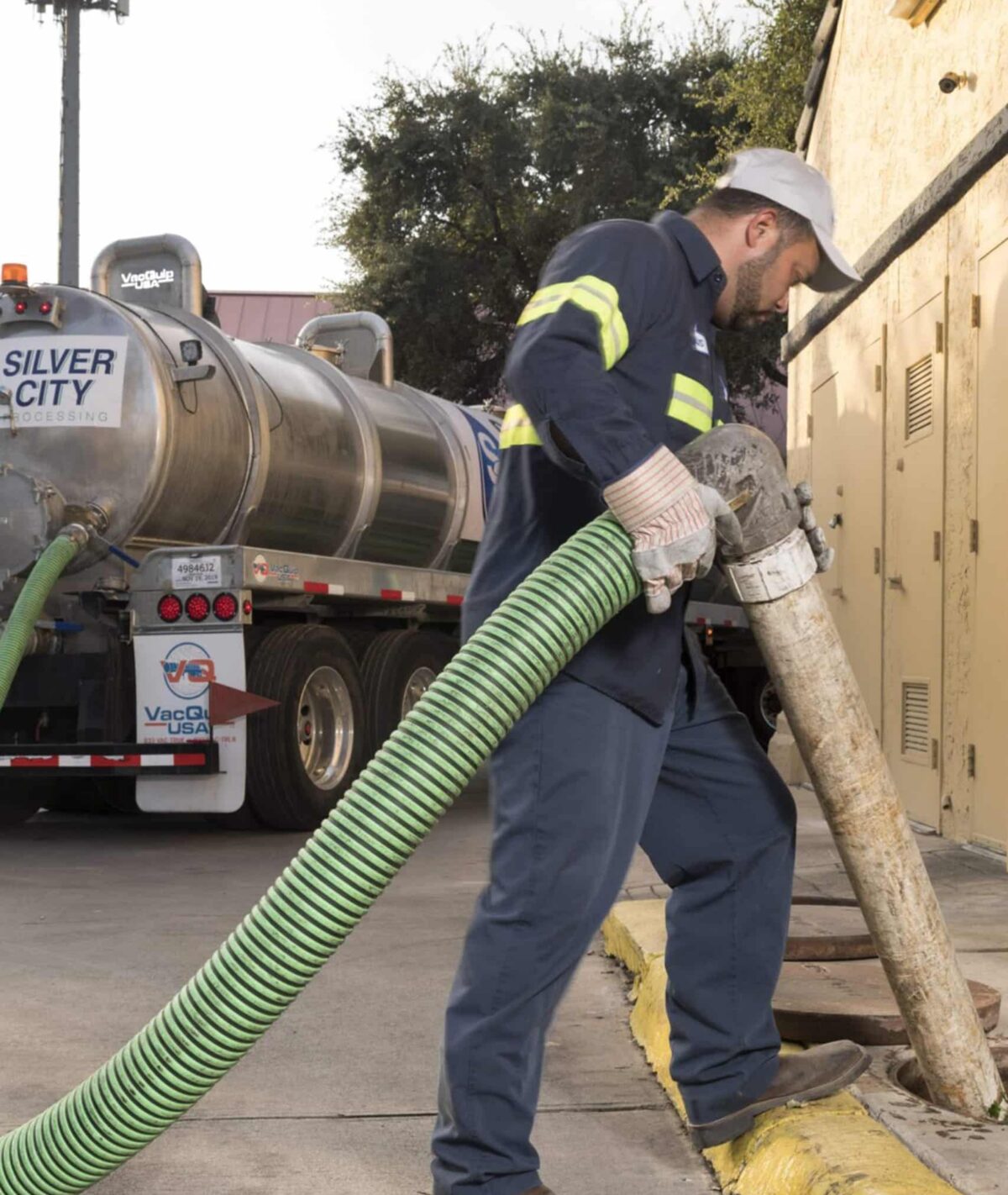
Real people, real hours
Office hours are Monday through Friday, 8am to 5pm Pacific. Emergency dispatch runs 24/7 — including weekends and holidays, because traps do not check the calendar.
Still Stuck?
Some questions are easier to answer on the phone
Trap sizing, failing inspections, and strange smells all depend on what is actually under your lid. Rather than guess, call and describe it — we can usually narrow down the cause in a couple of minutes.
Call dispatch
(702) 642-9318
Fastest answer for overflows, backups, and anything urgent.
Request service
Same-day scheduling available
Tell us the address and trap type, and we will send you a quote.
Email the office
info@silvercityprocessing.com
Best for manifests, account questions, and W-9s.
Manifests, inspections, and county rules
The FOG Compliance Resources page has the manifest anatomy, a 12-point inspection checklist, and the three county programs side by side. Open the resources →
KEEP READING
Pricing & Fees
How quotes and rates are built
Our Service Area
Las Vegas valley and outlying towns
Grease Trap Service
Pumping, cleaning, and TrapRenew
Compliance & ESG
Where the waste actually goes
One Call Covers It
Answered everything you needed? Let’s get a truck on the schedule.
Same-day scheduling across the Las Vegas valley, regular routes to the outlying towns, and 24/7 emergency dispatch when something has already gone wrong.